Executive Summary
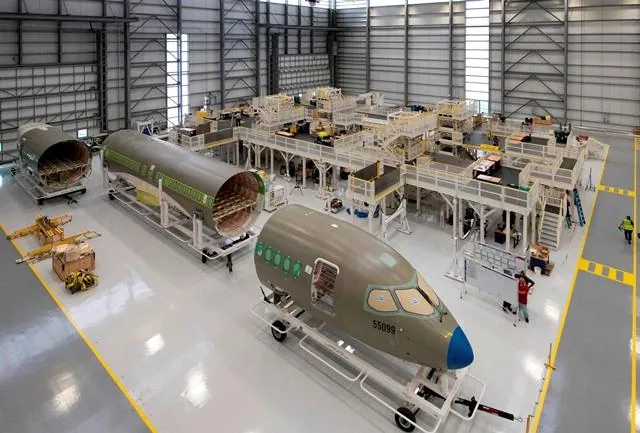
Commercial aerospace has a demand problem most industries would welcome: customers want more aircraft than the existing industrial base can rapidly produce.
By the end of June 2026, Airbus reported a backlog of 9,222 commercial aircraft. Boeing reported more than 6,200 commercial aircraft in backlog at the end of the second quarter of 2026. Together, the two largest commercial aircraft manufacturers therefore had more than 15,000 aircraft awaiting delivery, even before considering business aviation, rotorcraft, defense, space, engines, or other aerospace segments.
The implication is significant. Aerospace growth is increasingly constrained not simply by demand, engineering capability, or available capital, but by the industry's ability to physically convert orders into finished aircraft at sufficient speed and quality.
Manufacturing capacity has consequently become a strategic issue across the entire aerospace supply chain.
A Backlog Measured in Years
Airbus finished 2025 with a record backlog of 8,754 commercial aircraft after delivering 793 aircraft during the year. By June 2026, its backlog had increased further to 9,222 aircraft despite higher deliveries.
Boeing's commercial backlog exceeded 6,200 aircraft by the second quarter of 2026. Boeing was simultaneously working to increase 737 output and stabilize higher 787 production rates.
Those figures demonstrate an important feature of modern aerospace economics: an OEM can have extraordinarily strong demand while still being limited in how quickly revenue-generating products reach customers.
The bottleneck does not exist only at final assembly.
A commercial aircraft depends on a large network of companies producing castings, forgings, structural components, landing-gear hardware, engine parts, composites, avionics, interiors, fasteners, tooling and thousands of other items. Deloitte notes that a typical U.S. commercial aerospace OEM may have more than 200 Tier 1 suppliers and roughly 12,000 Tier 2 and Tier 3 suppliers.
The production rate of the complete aircraft can therefore be constrained by a comparatively small number of capacity-limited processes deep in the supply chain.
What “Capacity” Actually Means
Manufacturing capacity is more complicated than adding another CNC machine.
A supplier's effective capacity depends on the complete production system:
Machine capacity → skilled labor → tooling → material availability → inspection → special processing → qualification → logistics → approved production output
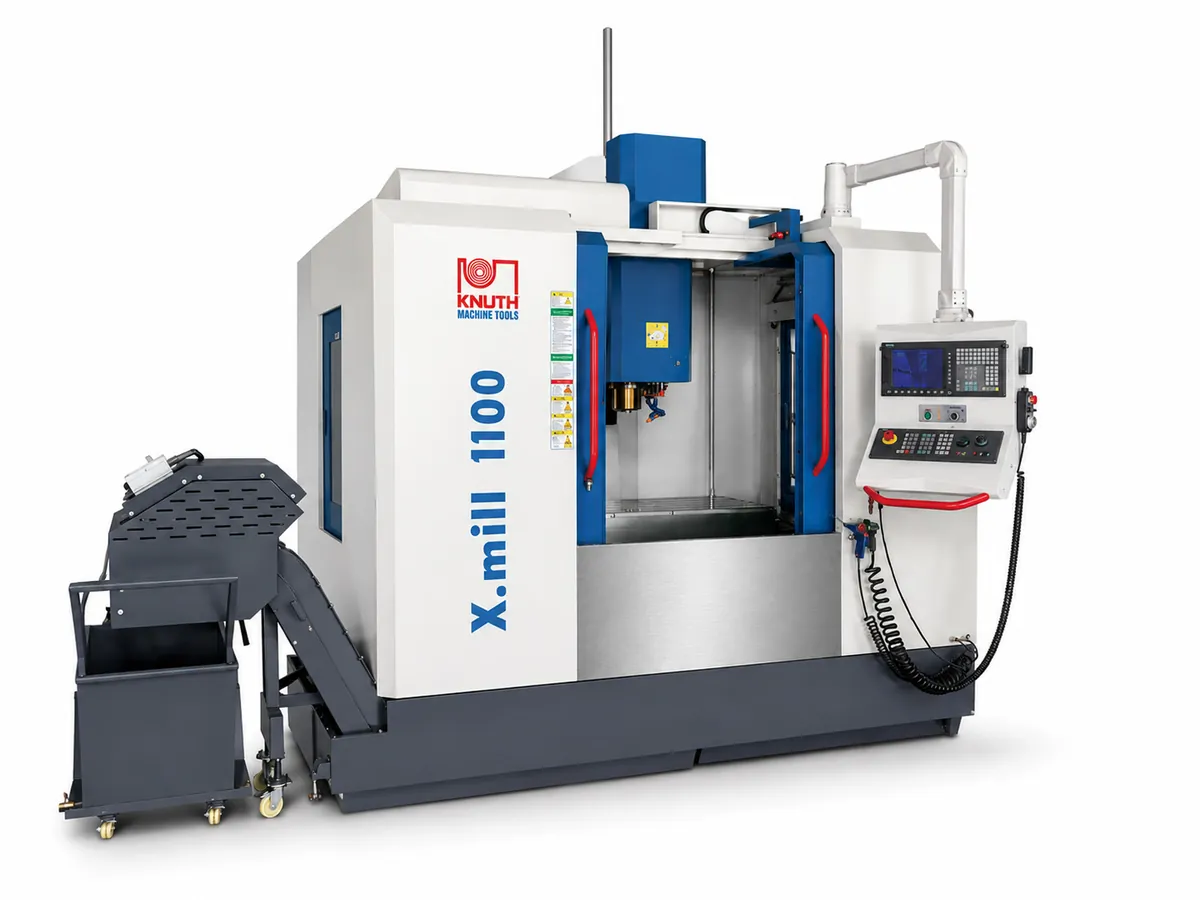
If a company installs a five-axis machining center but lacks qualified programmers, inspection capacity, tooling, fixtures, material, or downstream processing, theoretical spindle capacity does not become usable output.
The same principle applies to foundries. Adding casting furnaces alone will not solve a constraint if shell-building, core production, heat treatment, NDT or final machining remains overloaded.
For composite manufacturers, an additional AFP system provides limited benefit if tooling, cure capability, inspection or material handling cannot keep pace.
Capacity expansion therefore requires system-level planning.
Labor Is Part of the Constraint
Production equipment cannot be separated from workforce availability.
The Aerospace Industries Association identifies an aging workforce, turnover and difficulty retaining skilled employees as continuing aerospace workforce challenges. Deloitte likewise reported persistent aerospace talent shortages and noted that capacity expansion is intensifying workforce pressure.
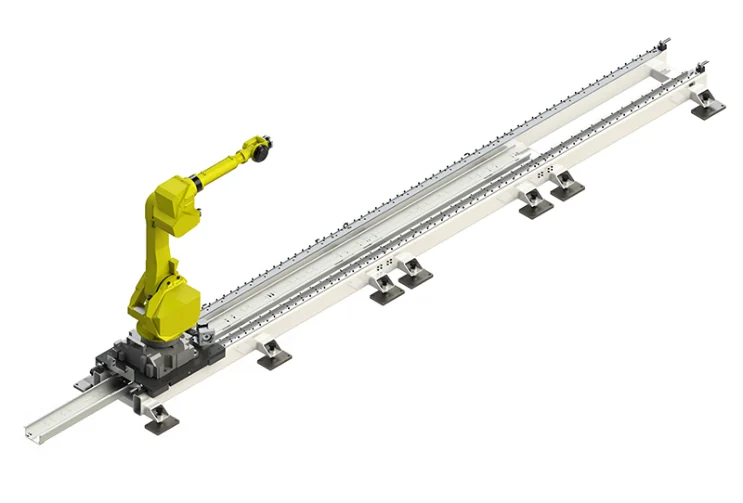
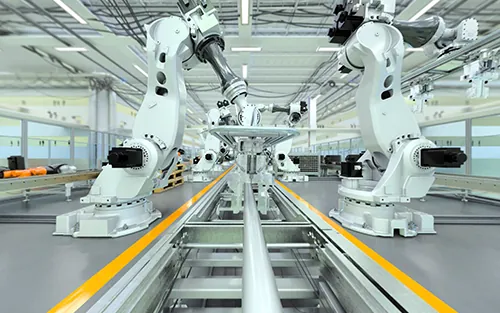
Automated loading, robotic machine tending, in-process measurement, digital work instructions, automated composite layup, robotic welding and mobile material handling can allow skilled employees to supervise more productive assets while concentrating human expertise on tasks that remain difficult to automate.
Why Aerospace Capacity Is Difficult to Add Quickly
Aerospace factories cannot always add output the way a general consumer-products manufacturer can.
Production systems frequently involve:
- expensive capital equipment;
- long machine delivery times;
- aerospace-specific tooling;
- customer qualification;
- special-process approvals;
- first-article inspection;
- extensive documentation;
- operator and programmer training;
- validated manufacturing processes; and
- strict configuration control.
A new machine may therefore arrive months before it becomes a fully productive aerospace asset.
The problem becomes more acute in technically demanding processes such as single-crystal investment casting, titanium machining, large composite layup, precision grinding, heat treatment and NDT.
That is why throughput—not merely installed machinery—is becoming the relevant metric. Deloitte reached a similar conclusion in its 2026 analysis of U.S. defense manufacturing, arguing that industrial throughput is becoming a strategic capability as demand outpaces production in important portions of the industrial base.
The New Capital-Equipment Priority
Historically, equipment acquisition might have focused primarily on whether a machine could manufacture a specified part.
Today's capacity environment requires a broader evaluation.
The better question is:
How much qualified output can this production system reliably generate per unit of labor, floor space, capital and time?
That pushes manufacturers toward technologies that improve overall productivity rather than simply individual process capability.
Examples include five-axis machining that reduces setups, automated pallet systems that extend unattended production, robotic shelling that standardizes repetitive foundry operations, AFP systems that automate composite layup, AMRs that reduce non-value-added transportation, and integrated metrology that shortens inspection cycles.
The Strategic Opportunity for Suppliers
For Tier 1, Tier 2 and Tier 3 manufacturers, the backlog creates both pressure and opportunity.
Suppliers capable of demonstrating repeatable quality and scalable manufacturing capacity are positioned to capture demand that may persist for years. But companies that wait until awarded volume exceeds available capacity may find themselves competing for the same machinery, skilled labor, service capacity and installation resources as the rest of the industry.
Capacity planning should therefore begin before the factory becomes constrained.
A useful sequence is:
Demand forecast → process capacity analysis → bottleneck identification → technology selection → financing → facility readiness → equipment acquisition → integration → qualification → production ramp
This converts capital investment from a reactive purchase into part of long-term production strategy.
Conclusion
The aerospace backlog is not merely an order-book statistic. It is a signal that manufacturing capability has become one of the industry's most important competitive resources.
Airbus and Boeing together entered the second half of 2026 with more than 15,000 commercial aircraft in backlog. Converting those orders into aircraft requires thousands of suppliers to increase output while maintaining aerospace-level quality and traceability.
The companies best positioned for the next aerospace production cycle will not necessarily be those with the most machines. They will be those that build integrated, automated and scalable manufacturing systems capable of converting equipment capacity into qualified production throughput.