Executive Summary
Automation in aerospace manufacturing is frequently described as a labor-replacement technology. That interpretation misses its more important role.
For much of the aerospace industrial base, automation is increasingly a labor-leverage technology: a method of allowing a limited number of skilled employees to support more productive capacity.
The Aerospace Industries Association identifies talent shortages, an aging workforce and skills gaps as continuing challenges. BLS projects tens of thousands of annual openings for machinists and tool-and-die makers even though total employment in those occupations is expected to remain roughly flat.
The underlying problem is therefore not simply the number of jobs created. It is the continuous requirement to replace experience and simultaneously increase production.
Why Aerospace Labor Is Different
Aerospace manufacturing depends heavily on skills that cannot be developed instantly.
A competent machinist must understand tooling, feeds and speeds, workholding, dimensional control and machine behavior. Composite technicians must understand layup requirements and defect prevention. Welders, inspectors and special-process technicians often work within tightly controlled procedures.
As experienced workers retire, companies lose more than labor hours—they can lose accumulated process knowledge.
This creates a particularly difficult challenge when the industry is also attempting to increase production.
Where Automation Provides the Highest Value
Automation is strongest when applied to tasks that are repetitive, ergonomically difficult, predictable or responsible for excessive machine idle time.
Machine Tending
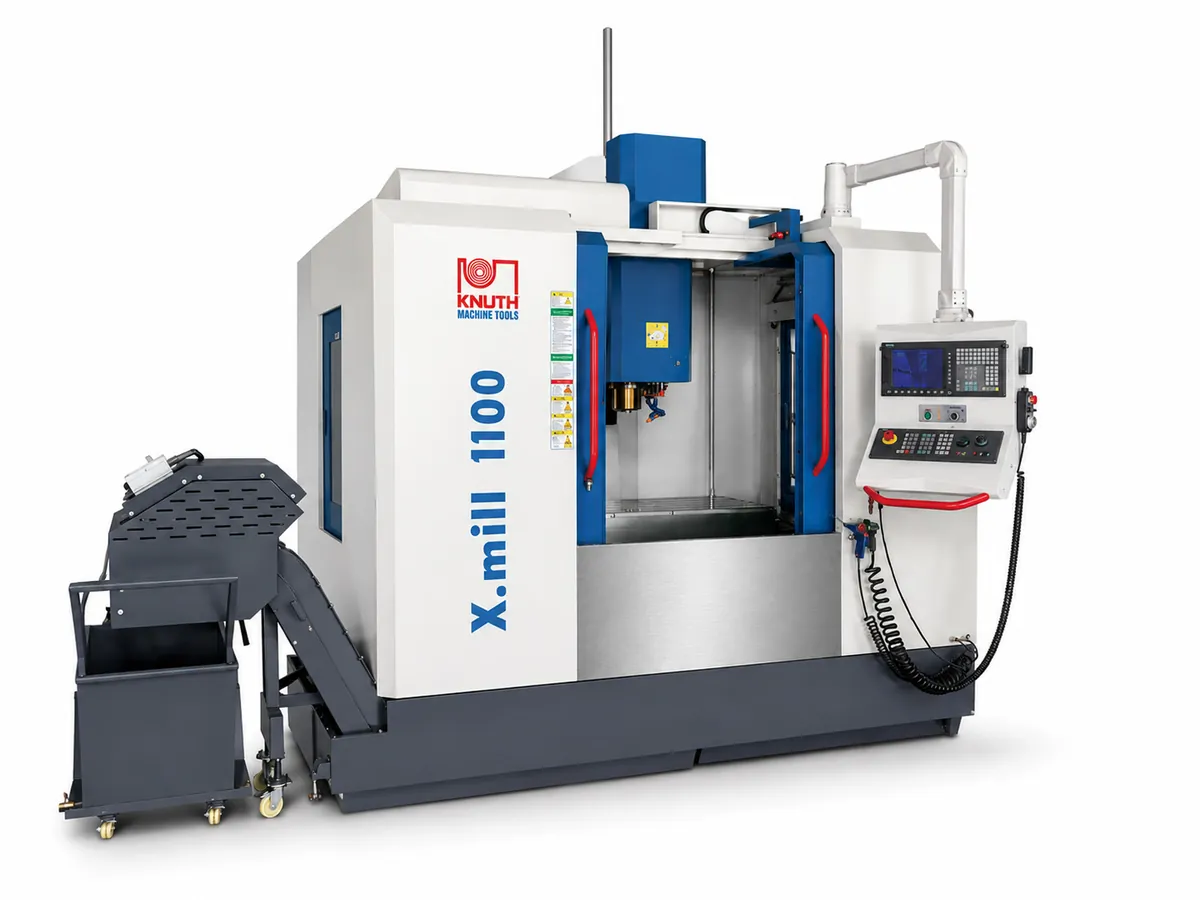
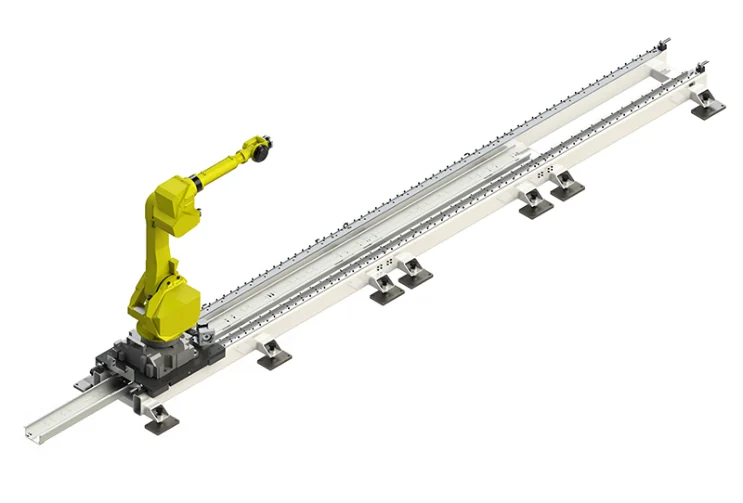
A robot or cobot can load and unload CNC equipment, allowing the machine to continue processing while the operator prepares jobs, performs inspections or supervises other assets.
The critical metric becomes spindle utilization, not simply operator utilization.
Automated Material Movement
AMRs can move raw material, tooling, work-in-process and finished components between production areas.
This reduces time spent by skilled personnel walking, driving forklifts or searching for material.
NIST identifies industrial mobile robots as an important technology for flexible manufacturing and has developed performance methods relating to navigation, docking and mobile-manipulator capability.
Robotic Processing
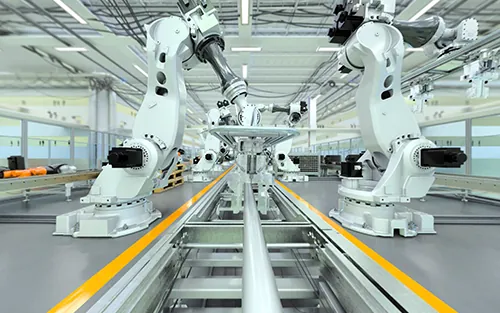
Robotic systems can also support welding, coating, grinding, deburring, inspection and composite manufacturing.
The economic value often comes from consistency as much as speed.
Automated Inspection
In-process probing, machine vision and automated metrology can shorten the delay between manufacturing and quality verification.
That matters because an aerospace production line can be constrained by inspection even when machining capacity is available.
Automation Does Not Eliminate the Need for People
Automation changes the skill mix.
BLS expects industrial machinery mechanics to be among the manufacturing occupations adding substantial employment, in part because increasing use of automated manufacturing equipment requires workers capable of maintaining and repairing it.
Future factories therefore require more people who can:
program equipment, manage automation, interpret process data, maintain robotic systems, troubleshoot controls, perform complex quality work and improve manufacturing processes.
The goal is not a workerless aerospace factory.
It is a factory where highly skilled workers spend less time performing repetitive material movement and more time applying technical expertise.
Safety Must Remain Engineered
Collaborative robots deserve particular care.
A robot marketed as a “cobot” is not automatically safe for every collaborative application. OSHA emphasizes that safe collaborative operation depends on the entire application, including robot speed, payload, end effector, workpiece and potential human contact. Risk assessment and appropriate safeguards remain necessary.
This distinction becomes especially important when machine tending involves sharp components, heavy workpieces or open machine tools.
The Better Automation Question
Manufacturers often ask:
“Can this operation be automated?”
A more useful question is:
“Which constraint prevents this production system from generating more qualified output?”
If machines sit idle because operators are loading parts, machine tending may be justified.
If workers lose significant time moving material, AMRs may help.
If quality personnel cannot inspect production fast enough, automated metrology may provide greater value than another production machine.
Automation should follow the bottleneck.
Conclusion
The aerospace workforce challenge is unlikely to be solved through hiring alone. Production demand, retirement-related replacement needs and increasingly sophisticated manufacturing technologies make that strategy difficult to scale.
Automation offers a complementary approach: increase the productive capability of each employee while improving process consistency and machine utilization.
The winning factory will not necessarily have fewer people.
It will have more productive people supported by better technology.