Automation for High-Mix Production
Aerospace machining frequently involves lower volumes and greater product variety than industries built around continuous mass production.
That historically made rigid automation difficult to justify.
Cobots, flexible robotic cells and autonomous mobile robots change the equation because they can be redeployed across multiple tasks.
The objective is not necessarily a completely autonomous shop.
It is to reduce the amount of skilled human time consumed by repetitive machine support activities.
Cobots
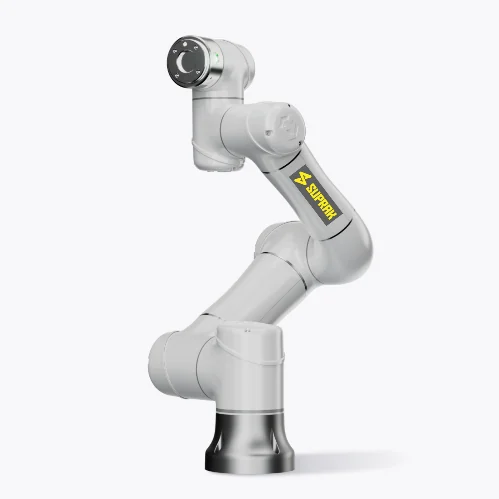
Collaborative robots are designed with capabilities that can support certain applications in shared environments.
For machine tending, a cobot may:
open a machine door, remove a completed workpiece, clean or inspect the fixture, load the next workpiece and initiate the cycle.
This can allow operators to supervise multiple machines rather than remain physically stationed at one machine.
However, OSHA makes clear that collaborative safety is determined by the application, not merely the robot. Payload, speed, end tooling, workpiece hazards and potential contact all need to be evaluated.
A cobot holding a sharp aerospace component may therefore require guarding even if the robot itself has force-limiting capability.
Traditional Industrial Robots
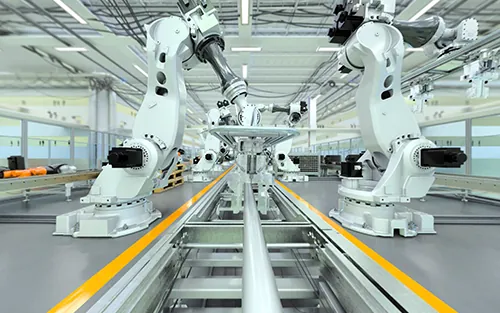
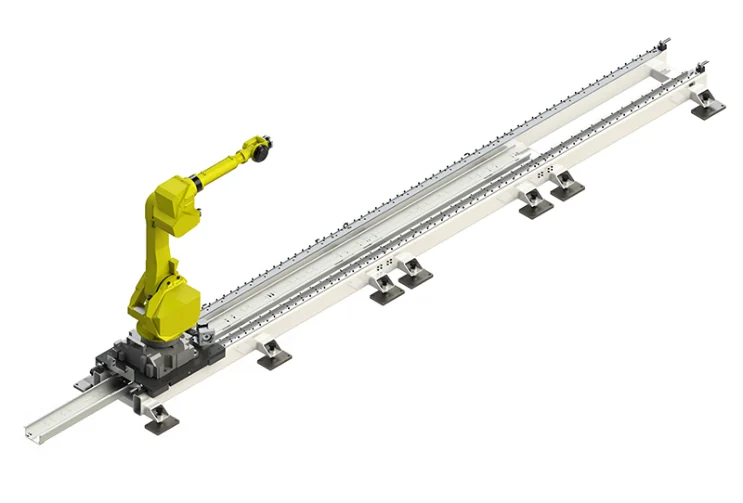
Where higher payloads, faster movement or larger production volumes are required, conventional industrial robots may offer better economics.
A safeguarded robot cell can service one machine or a group of machines with:
raw-material racks, inspection stations, washing systems and pallet storage.
The choice between cobot and conventional robot should be based on the production requirement rather than the popularity of the technology.
AMRs
AMRs automate movement between operations.
A machine shop can use them to deliver:
raw stock, pallets, tools, fixtures, inspection lots and completed components.
NIST research on AMRs emphasizes navigation, docking, obstacle avoidance and measurable performance in realistic manufacturing environments.
This matters because manufacturing environments are dynamic. People, carts, pallets and production equipment create conditions different from an empty demonstration floor.
Machine Tending as a Capacity Strategy
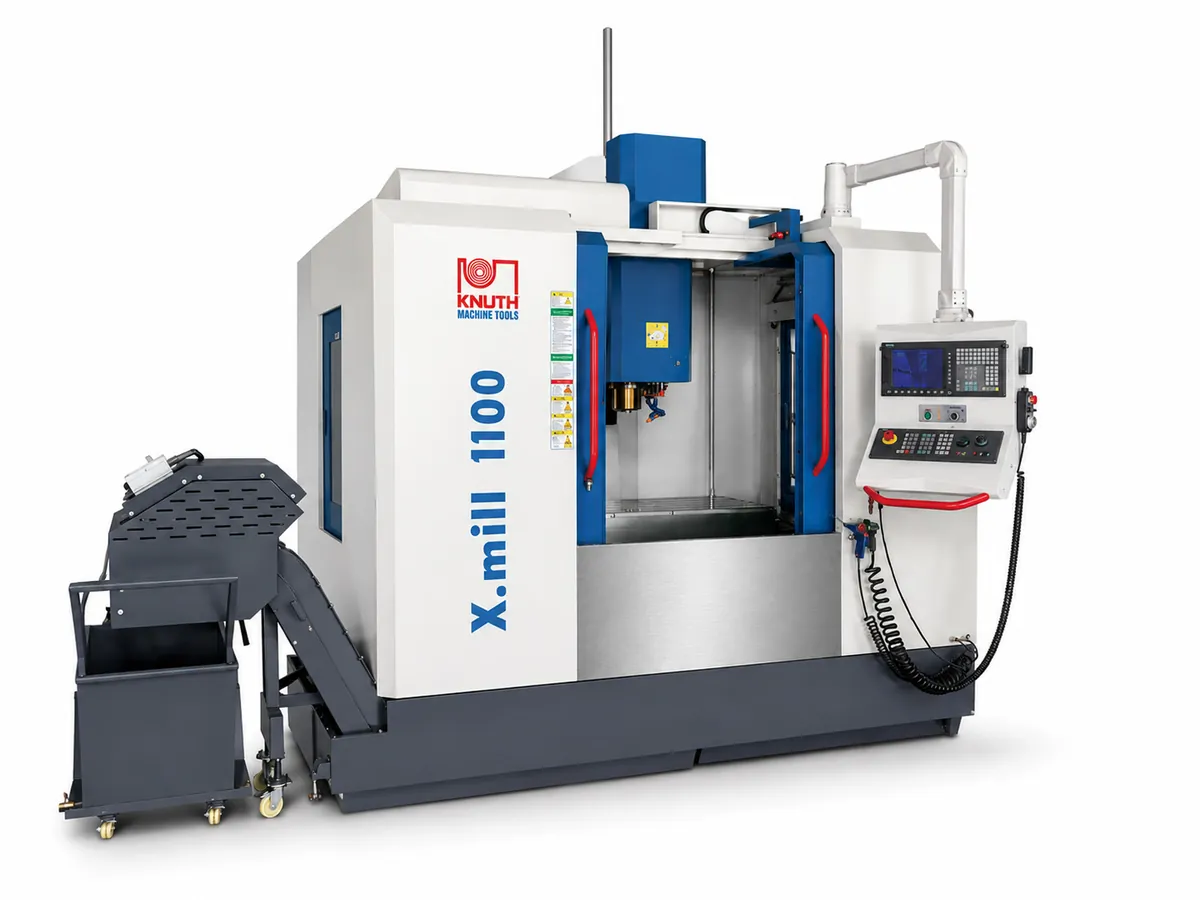
Consider a machining center with a 45-minute cycle.
If an operator takes ten minutes to unload, inspect and reload each job—and the machine waits for the operator—that machine loses meaningful productive time every cycle.
Automation can convert part of that idle time into cutting time.
Across multiple machines and multiple shifts, modest utilization improvements can represent substantial additional annual capacity.
That is why machine tending should be evaluated using machine-hours recovered, not simply labor-hours removed.
Conditions for Successful Deployment
Flexible automation works best when upstream processes are stable.
Parts need consistent loading orientation. Fixtures need defined interfaces. CNC programs must be reliable. Tool life needs to be understood. Chips and coolant need to be managed.
A robot cannot economically compensate for an unstable manufacturing process.
Integration With Inspection
The next stage is closed-loop automation.
The robot unloads a part, places it in a gauging station, and measurement results inform whether production should continue or tool offsets should be adjusted.
This type of integration moves automation from material handling toward autonomous process control.
Conclusion
Cobots, industrial robots and AMRs solve different parts of the same problem.
Cobots provide flexible manipulation.
Industrial robots provide speed and payload.
AMRs provide flexible transportation.
When combined with reliable CNC processes and digital production systems, they can allow an aerospace machine shop to generate more output from the same installed machine base and workforce.